
Why Signing a Petition Can Help Improve How We Choose Our Leaders


Ever feel like your voice gets lost between election cycles? You vote, the results are in, and then it feels like you have to wait years for another chance to be heard on big issues. This gap can make democracy feel static. But there’s a tool built into the UK’s system that lets citizens set the agenda directly: the official petition. When enough people Sign The Petition, it forces Parliament to listen and can be the crucial first step in changing laws, including how our elections work.
It turns individual concern into collective power, proving that public demand can reshape politics.
How Do Petitions Work in the UK System?
A petition to the UK Parliament is a formal request for action. If it gathers 10,000 signatures (we currently have 1,250), the government must respond. If it reaches 100,000, it is considered for debate in Parliament. This process turns public interest into a formal political priority.
Think of it as a direct line to the heart of decision-making. It’s a structured, recognized method that translates what people are discussing in their communities into issues MPs must address. For issues like electoral reform, it’s often the essential starting point that proves an idea has popular backing before any politician drafts a new bill.
- Guarantees an Official Response: Hitting the first threshold means the government cannot ignore the issue.
- Triggers Parliamentary Debate: The 100,000-signature mark can put the topic on the Commons agenda, generating national attention.
- Demonstrates Widespread Support: It provides undeniable, quantifiable evidence that a large number of people want change.
Can a Petition Really Change Something Big?
Yes, absolutely. History shows that petitions have been powerful catalysts for major democratic reforms. They compel the political establishment to engage with ideas they might otherwise overlook.
The most powerful modern example is the 2016 petition to “Hold a second EU Referendum.” It gained over 4 million signatures, becoming the largest in UK history. While it did not reverse the Brexit result, it triggered a lengthy parliamentary debate and demonstrated the intense, organized public sentiment on the issue. It showed the mechanism’s power to make dissent and demand impossible to ignore on the biggest national stage.
From Chartist Demands to Modern Reform
The fight for fairer elections itself has deep roots in petitioning. In the 18th century, the Chartist Movement presented massive petitions to Parliament, including one with over 3 million signatures, demanding democratic rights, including secret-ballot voting. While rejected at the time, these petitions kept relentless pressure on the establishment and laid the groundwork for the Reform Acts that followed. They prove that sustained public pressure, channeled formally, can eventually break through.
Setting the Agenda on Electoral Change
Right now, petitions are actively shaping the conversation on how we vote. Recent petitions for electoral reform, including one advocating a “None of the Above” option on ballots, have garnered over 10,000 signatures, prompting an official government response. This shows the process in action today, keeping the issue of how we choose our leaders in the official spotlight and on the ministerial desk.
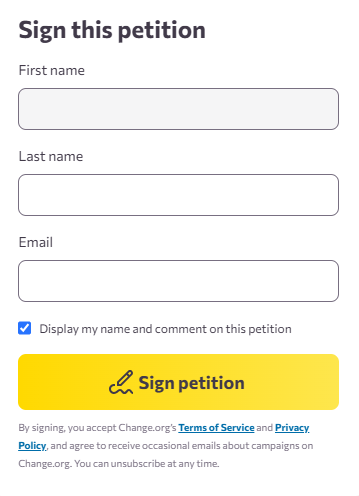
To sign the petition, you only need to be a UK citizen and provide minimal details to sign the petition as shown below:
A Tool for Every Constituency
The power of a petition isn’t limited to the national level. It amplifies local voices on national issues. When residents in Manchester, Bristol, or Glasgow sign a petition for better democratic tools, it tells their local MP that this isn’t a niche concern but a priority for their voters. This local pressure from multiple constituencies is what builds the cross-party interest needed for real legislative progress.
What is the Real Pathway from a Signature to Change?
Signing a petition is the first step in a clear democratic process. It moves an idea from public discussion into the formal political arena, where it must be addressed.
The journey is designed to build momentum. It starts with public mobilisation, proving an idea has grassroots support. This evidence is then used to lobby MPs and peers directly, arguing that the issue matters to their constituents. The final goal is to translate this demonstrated public will into a legislative proposal for a vote.
- Creates a Public Mandate: The signature count is tangible proof of support that MPs respect.
- Enables Direct Lobbying: Campaigners use the petition’s success as evidence when meeting with MPs and ministers.
- Lays the Groundwork for a Law: A successful petition creates the conditions for a supportive MP to table a Bill, pushing the idea toward becoming law.
Ready to use your voice to set the political agenda? Visit the Veto Campaign and sign the official petition for electoral reform to show your support for improving how we elect our leaders.
Final Thoughts
Signing a petition is far more than a symbolic click. It is a foundational act of participatory democracy that bridges the gap between elections. It provides a formal, powerful mechanism to collectively set priorities and demand accountability on issues that matter, including the very health of our democratic system. By adding your name, you help transform shared concern into a political imperative, proving that change often starts with the simple act of saying, “We, the public, want this discussed.”
Your signature on the Veto Option carries weight. Join others across the UK in calling for a debate on how to build a more responsive democracy.
Note: Any opinions expressed by guest contributors are their own and do not constitute an official position of the Veto Campaign. We welcome diverse perspectives to foster meaningful discussion on the veto option and electoral processes.