
Why Silence in Elections Doesn’t Always Mean Agreement?

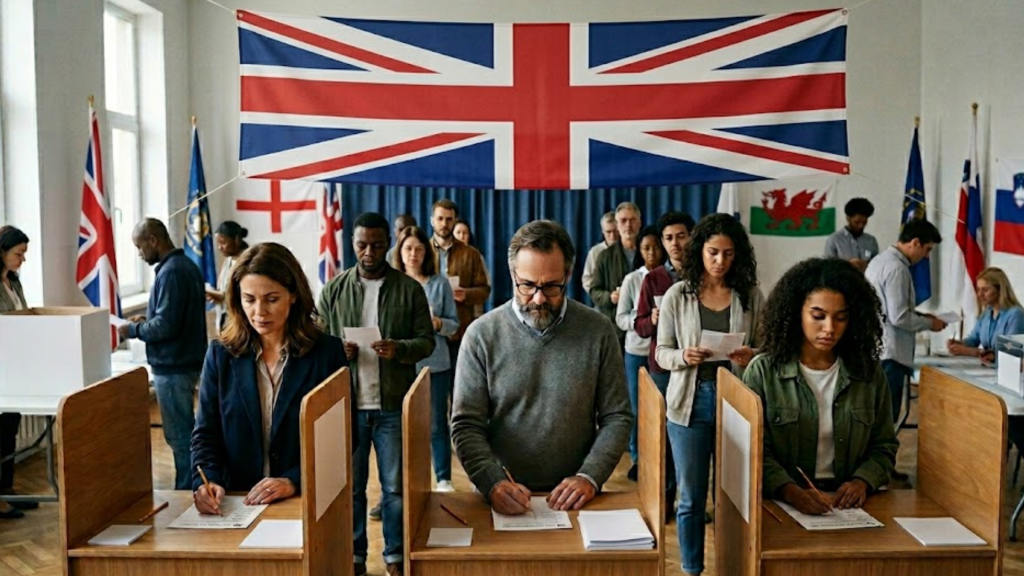
Every election cycle, millions of UK voters stay home. The Veto Option addresses the real reason behind that silence, not laziness or apathy. Think about it this way. You go to a restaurant, look at the menu, and nothing on it appeals to you. Do you just pick something anyway? Some people do. Others walk out. In UK elections, walking out gets counted as agreement with whoever wins. That is the problem. Right now, there is no way for voters to say “I reject all of this” and have it count for anything.
The current electoral system treats silence as a blank cheque. That needs to change, and it can.
What Is Voter Silence Really Telling Us in UK Elections?
Voter silence in UK elections rarely means satisfaction. It usually means frustration with no outlet. When voters feel that no candidate speaks for them, staying home feels like the only honest option. But the system never asks why they stayed home. It just moves on.
What is actually behind that silence:
- Many voters have tried different parties across multiple elections and felt let down every single time.
- In constituencies that have voted the same way for 50 or 100 years, people genuinely feel their vote changes nothing.
- Some voters refuse to tick a box for someone they do not trust, even if it means not voting at all.
- First-time voters who felt ignored after their first election are rarely motivated to try again.
- A large number of non-voters say they would engage if there were a proper way to reject all available choices.
How Does the Current System Get Voter Dissatisfaction So Wrong?
The UK electoral system was not built to measure dissatisfaction. It was built to produce a winner. So when voters feel let down, that feeling gets swallowed up by the final result and never appears in any official count. Nobody is required to respond to it.
Three things drive this problem more than anything else.
Winning a Safe Seat Requires Almost Nothing
Before the 2024 general election, 247 UK constituencies had been held by the same party for over 50 years. According to ERS, over 100 seats haven’t changed hands for 100 years or more. In Blaenau Gwent and Rhymney, the winning candidate took the seat with just 23% of the total eligible votes. More than half the constituency did not vote. The system recorded that as a normal result.
No alarm was raised. No response was required. The majority’s frustration simply did not count.
- A party holding a safe seat faces almost no pressure to listen to dissatisfied voters.
- Low turnout gets folded into the result rather than treated as a warning sign.
- Constituents with genuine grievances have no formal way to register them on the ballot.
Tactical Voting Hides What Voters Want
In the 2017 general election, the Electoral Reform Society estimated that around 20% of voters cast a tactical ballot. They were not voting for a candidate they supported. They were voting to stop a candidate they feared. That is one in five voters sending a signal the system records as genuine approval.
Over time, this distorts everything. Parties read those votes as endorsements and govern accordingly.
- Vote totals no longer show what the public genuinely wants.
- Parties claim a public backing they have not actually earned.
- Voters who voted tactically get represented by someone they never chose in good faith.
Abstention Gets Treated as Indifference
When someone does not vote, the system files that away as disengagement. But there is a real difference between someone who forgot to register and someone who looked at the ballot, felt nothing deserved their support, and stayed home deliberately. The current system cannot tell them apart.
Both get recorded the same way. Neither triggers any kind of response.
- Frustrated non-voters are lumped in with genuinely disinterested ones.
- Governments read low turnout as a neutral outcome rather than a sign of failure.
- The scale of public dissatisfaction stays hidden because it was never officially counted.
Why Should You Aim to Introduce the Veto Option in UK Elections?
All three problems above come back to the same missing piece. Voters in the UK currently have no formal way to reject an election and have that rejection count toward an actual outcome. The VETO option for UK elections would change that.
The idea is simple. If a majority of voters in a constituency choose the Veto Option, the election is rerun. The seat stays empty until a candidate earns genuine majority support. Parties then have to compete for the votes of people who previously felt they had no one worth backing.
This is what the veto election campaign in the UK is working toward right now. The petition is live and currently has 1,347 signatures. To trigger a formal response from UK Parliament, the campaign needs to reach 10,000 signatures. Every name on that petition makes the case harder to ignore.
The reform matters because it changes the pressure on politicians in three ways:
- Negative campaigning stops working because attacking opponents pushes frustrated voters toward rejection rather than toward you.
- Safe seats stop being guaranteed because a credible rejection choice sits on the same ballot paper.
- The millions who did not vote in 2024 have a real reason to show up because their choice would carry a recorded, binding consequence.
Voter control for UK elections should mean more than picking the least bad option available. If you agree, add your name to the petition at Veto Campaign and help push that count toward 10,000.
Final Thoughts
Silence in an election is not a clean signal. It carries frustration, distrust, exhaustion, and in many cases a very deliberate refusal to endorse anyone on offer. The problem is that nothing in the current UK system is designed to hear it.
The Veto Option turns that silence into something the system has to respond to. It is not a complicated reform. It is one extra choice on a ballot paper that makes the whole thing finally honest. Voters from Cardiff to Manchester, from Edinburgh to Birmingham, deserve an election system that can distinguish between “I am fine with this” and “I am done waiting for better.”
That difference starts with 10,000 signatures. Thousands of UK citizens are already participating. You can sign the Petition and add your signature today.
Note: The views and opinions expressed in guest contributions are solely those of the authors and do not necessarily represent the official position of the Veto Campaign. We encourage constructive dialogue and the exchange of diverse perspectives on improving democratic engagement and electoral processes.