
How the Veto Option for UK Elections Addresses the Problem of Limited Choice

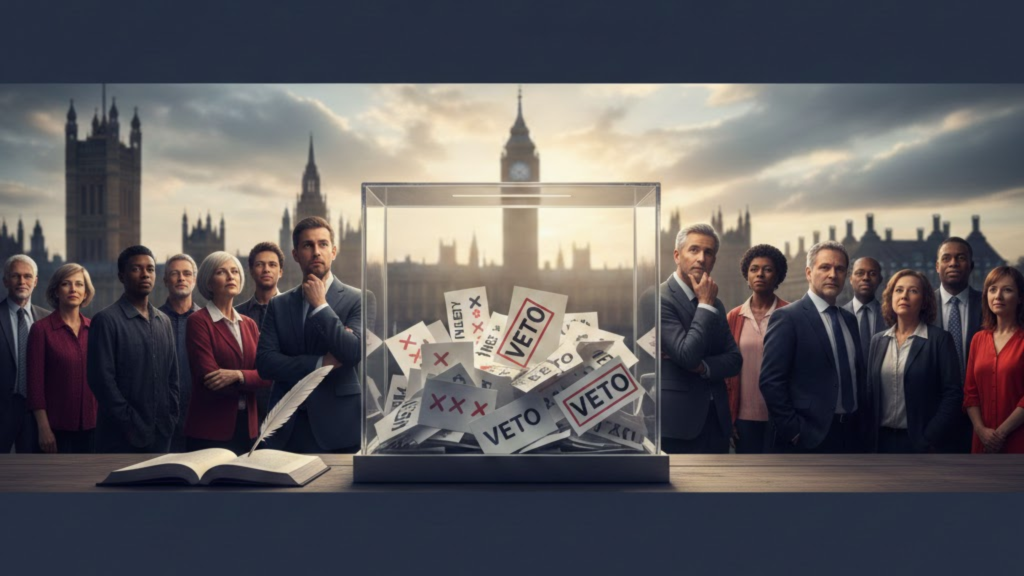
When you walk into the polling booth, you probably expect to find a genuine choice waiting for you. Instead, many UK voters leave feeling they’ve picked the lesser evil rather than someone they actually wanted to represent them. The feeling of being trapped between inadequate options has become so normal that most people don’t even question it anymore. But what if there was another way? What if the veto option could reshape how we vote and give voters real control over the kind of candidates they get to choose from?
Understanding how this works means recognizing a fundamental problem first: our elections don’t actually measure whether politicians have earned our consent to govern.
What Creates the Feeling of Limited Choice in UK Elections?
UK voters face genuine constraints that aren’t about personal preference or political leanings. Under First Past the Post, you need just one more vote than the second-placed candidate to win, regardless of whether you’ve convinced the majority of people in your constituency to back you. This system creates a straightforward but damaging problem: your vote might not matter at all, or it might force you to abandon your genuine choice.
The 2024 general election laid bare how broken this feels. A staggering 74% of votes cast made no difference to the final result, either going to candidates who lost or to winners who already had a comfortable majority. Nearly 60% of UK voters didn’t even bother turning out, marking the second-lowest turnout since universal suffrage began.
Here’s what happens when you can’t vote freely:
- Safe Seats Entrench Power: Hundreds of constituencies have been represented by the same party for a century or more. Your vote matters little if you live somewhere party loyalty has calcified into tradition.
- Vote Efficiency Creates Unfair Results: In the 2024 election, Labour won 63% of parliamentary seats with just 34% of the national vote share. Meanwhile, Reform UK got 14% of the votes but only 5 seats. Your vote’s value depends on where you live, not just what you believe.
- Tactical Voting Replaces Genuine Preference: Millions of voters abandon their first choice to “block” a candidate they dislike more. Voting for who you actually want becomes a luxury calculation rather than a democratic right.
- Trust in Politics Collapses: When elections consistently ignore the nationwide spread of opinion, people stop believing the system is legitimate. Confidence in political parties hit an all-time low in 2024.
- Candidates Ignore Real Problems: When politicians know they’re safe in their seat, why work hard to address constituent concerns? Limited choice doesn’t just frustrate voters; it enables politicians to become complacent about governance.
How Can a Veto Mechanism Expand Real Choice for UK Voters?
The VETO option for UK elections gives voters something they currently lack: a formal, binding way to reject the entire election and demand better representation. This isn’t about spoiling your ballot or abstaining quietly. It’s a counted vote that carries real consequences. If enough people choose to veto in a constituency, it triggers a by-election with the seat left vacant until someone wins with a genuine majority consent.
This mechanism works differently from what most people might imagine. It’s not designed to remove bad politicians directly. Instead, it changes the incentives for political parties and candidates before the election even happens. The mere threat of a veto majority forces candidates to ask themselves: “Am I offering something good enough that the majority of my constituency wants to be represented by me?” That question alone reshapes the entire process.
Don’t settle for inadequate choices. Read the Veto Campaign white paper and sign the petition to support the veto option and tell politicians that voters demand the power to withhold consent.
How the Veto Option Gives Voters More Influence Over Candidate Quality?
Right now, voters have essentially zero leverage over who gets nominated. Party hierarchies decide, and unless you’re an active party member, you have no say. The veto option shifts this power. If local party activists see that veto reached 20, 30, or even 40% of the vote in their constituency, they know the message is clear: this candidate didn’t connect with people. In the next election, they’ll nominate someone different.
For example, Keir Starmer won his constituency with just 26% of the total electorate voting for him, while 46% didn’t vote at all, and another 26% voted for other candidates. Could veto have forced a conversation about whether this outcome truly represented the constituency’s will? Absolutely.
This creates measurable pressure:
- Parties Respond to Local Feedback: If veto reaches 30% of votes, it signals widespread dissatisfaction. That’s too large a group to ignore, and parties will work to understand why.
- Activists have Real Data: Instead of guessing what constituents want, party activists can point to veto numbers and demand better candidate selection from their leadership.
- Incentives Align with Governance: Candidates who worry about a veto majority think about appealing to the broadest possible group, not just their party base.
The Veto Campaign is building momentum right now. If you believe voters deserve real power to demand better representation, sign the petition and join thousands of others pushing for genuine democratic change.
How Does the Veto Option Support Voter Control for UK Elections?
The concept of voter control has become almost theoretical in modern UK politics. You’re asked to choose, but the options are constrained by forces outside your influence. The veto option fundamentally transforms this dynamic.
Voter Control for UK elections means your dissatisfaction has measurable, concrete consequences. It means parties and candidates must listen to you, not just during election campaigns but in how they prepare candidates for elections. It means someone who doesn’t represent you can’t simply assume they’ve earned the right to govern. This is what democratic consent actually looks like in practice.
Without a veto option, elections measure only who won, not whether the winner had genuine legitimacy. With veto, voters get a quantified voice:
- Dissatisfaction becomes measurable data: Veto numbers tell politicians exactly how many people in their constituency think they’re inadequate. This is feedback that demands a response.
- Power shifts from parties to voters: Instead of parties deciding what voters should accept, voters decide what candidates are acceptable. The burden of proof flips.
- Democratic consent becomes real: A candidate who wins can know that the majority chose someone, even if that someone wasn’t their first preference. Without veto, you can’t know this at all.
Related Read: Why Voters Deserve the Right to Withhold Consent in Elections?
What Could UK Elections Look Like With a Genuine Choice-Expanding Reform?
Imagine a general election where candidates know they might face a re-run if they don’t connect with their constituency. Not because the media said so, but because voters formally rejected them. What shifts?
First: The quality of public debate would change. Negative campaigning decreases when politicians know it triggers veto votes. You’re less likely to see endless personal attacks because voters respond to mudslinging by vetoing. Instead, parties would compete on substance: what are you going to do about housing costs? How will you fix NHS waiting times? What’s your strategy for local economic development?
Second: Underrepresented groups would find a voice. In many constituencies, neither major party has significantly engaged with particular communities because they know the outcome is already decided. The veto option gives those communities leverage. Ignore us, and veto rises. That alone shifts where candidates focus their effort.
Third: Trust in democracy might begin to recover. The 2024 general election saw record distrust in political parties. Part of this stems from the feeling that politicians don’t have to earn your support; the system does it for them. A veto option changes this. You now have proof that someone cares about your consent.
Real-world outcomes would probably include:
- Better-qualified Candidates Running for Office: Fear of by-elections and veto majorities incentivises parties to recruit respected, locally-known figures rather than outsiders or careerists.
- Reduced Tactical Voting Necessity: If you trust candidates more and feel they’ve earned their position, you’re less driven to vote against your conscience to block someone else.
- Smaller Majorities within Constituencies: With lower incumbency complacency, even traditionally safe seats would see tighter results and more genuine competition.
- Voter Turnout Beginning to Climb: People respond when they feel they have real power. Making the election actually matter would draw more people to the polls.
- Conversation about Governance: Refocusing on the Common Good. When politicians must please the majority of their constituency to avoid re-runs, short-term partisan games matter less than long-term delivery.
How Is the Veto Election Campaign Supporting This Push for Real Choice?
The movement toward meaningful electoral reform isn’t abstract. Real people and organisations are pushing for change right now. The Veto Campaign has grown from a proposal into an active movement because the frustration with limited choice has reached a breaking point.
The veto election campaign in UK focuses on making voters understand that their rejection of inadequate choices matters. It’s not about removing MPs whom people actively dislike. It’s about creating a system where politicians have to earn your consent, not just assume it. This shifts power fundamentally from political structures to ordinary people.
The campaign is working on several fronts:
- Public Awareness Building: Most voters don’t know a veto option is being proposed or how it would work. The campaign explains why this matters and how it addresses the specific frustration of feeling forced into inadequate choices.
- Evidence Gathering: By documenting how many people would veto in different constituencies and why, the campaign builds a case for institutional change. The data speaks louder than ideology.
- Coalition building: The campaign brings together electoral reformers, voter advocates, and concerned citizens from across the political spectrum. This isn’t a partisan issue; it’s about democratic legitimacy.
What the campaign has learned is that voters want three things: the ability to reject inadequate choices, certainty that their rejection will be heard, and real consequences for parties that fail to field quality candidates. The veto option delivers all three.
Final Thoughts
Limited choice in UK elections isn’t a feature; it’s a flaw. When nearly three-quarters of votes are wasted and voters feel forced to vote tactically instead of for their genuine preference, something is fundamentally broken. The veto option addresses this directly. It gives voters the power to demand better, and it gives parties a real incentive to deliver better candidates. Your vote deserves to matter. Not just in determining a winner between pre-selected options, but in shaping what options get selected in the first place. That’s what the veto option makes possible.
Ready to give voters real control over who represents them? Sign the VETO Campaign petition today and help make this reform a reality across UK constituencies.
Disclaimer: Opinions shared in guest-authored blogs on this website are those of the authors and do not necessarily represent the official position of the Veto Campaign. We welcome a range of perspectives to encourage meaningful discussion about the Veto Option and its role in shaping the electoral process.