
The VETO Option and Voter Participation: A New Era for UK Elections

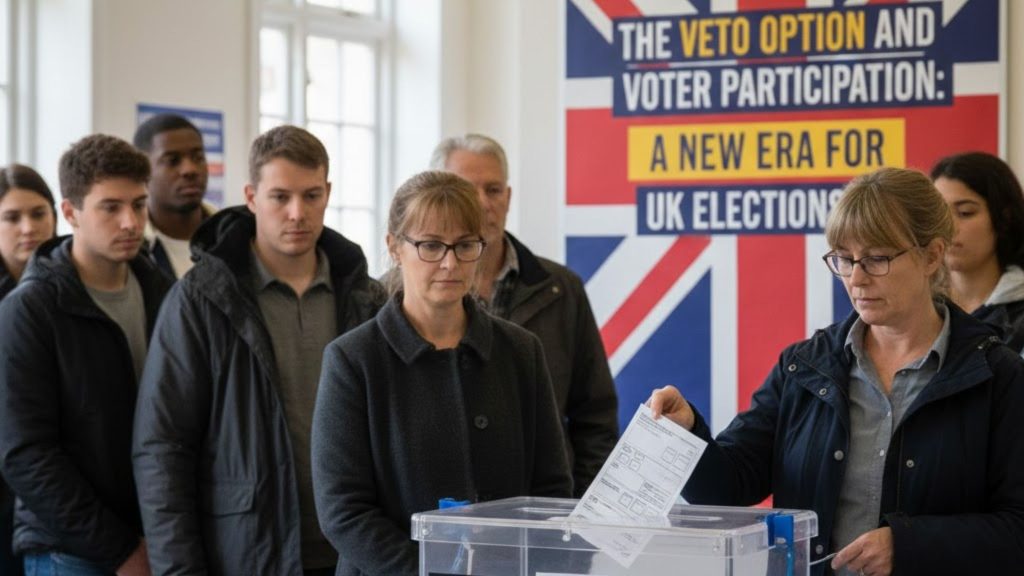
The VETO option and voter participation are directly linked in ways most people haven’t considered. Right now, millions of British citizens skip elections entirely. They’re not lazy or apathetic. They just don’t see the point when every candidate fails to represent their interests. The 2024 General Election turnout dropped to 43% in some constituencies, with 57% staying home. That’s not democracy working.
The VETO option changes the game by giving non-voters a reason to show up. Instead of choosing among unsatisfactory options, people can reject the entire election and force a rerun with better candidates. This transforms democratic participation from a frustrating ritual into genuine power.
What Stops People From Voting in UK Elections?
People skip elections when they feel their vote has no meaningful effect. The current system offers no way to formally reject all candidates, so dissatisfied citizens either hold their nose and pick someone or stay home entirely. Both choices leave voters feeling powerless.
Five major barriers block meaningful participation:
- Safe seats make outcomes predetermined, leading voters to believe that their input changes nothing about who wins.
- Candidates selected by party machinery rarely reflect what ordinary people actually want from government.
- Lesser-evil voting forces people to support politicians they dislike merely to block worse alternatives.
- No formal mechanism exists to signal that all available choices fail minimum acceptability standards.
- Winners claim mandates despite lacking support from most eligible voters, making participation feel pointless.
How Would the VETO Option Increase Turnout and Engagement?
The VETO option brings non-voters back by giving them real power to improve their choices. When people can reject an election and force candidates to try harder, participation becomes worthwhile. Early data support this.
A Political and Constitutional Reform Committee study found that 72% of respondents wanted this option available. That enthusiasm suggests millions currently sitting out elections would engage if they had meaningful influence over the quality of candidates offered.
Non-Voters Aren’t Apathetic
Most people who skip elections care about politics but see no acceptable path to influence. They watch debates, read the news, understand the issues, and conclude that none of the candidates deserve their support. The system treats this as laziness, even though it’s a rational response to poor options.
When Blaenau Gwent recorded a 57% stay-home rate, politicians attributed it to voter apathy. The real problem was that voters looked at the choices and said no thanks. You can’t measure the difference between genuine disinterest and active dissatisfaction when the ballot provides no way to formally reject elections.
This measurement gap distorts how politicians understand their constituents:
- MPs interpret low turnout as permission to ignore nonvoters rather than as criticism of the choices available.
- Media coverage frames abstention as civic failure rather than voter judgment about candidate quality.
- Party strategists focus resources on the shrinking pool of reliable voters rather than on addressing why millions tuned out.
Tactical Voting Reveals Desperate Engagement
Twenty percent of 2017 voters cast ballots tactically, meaning they voted against someone rather than for anyone. Think about the psychology there. These people cared enough to show up but felt so trapped by the system that they couldn’t even support a candidate they liked. They just tried to block whoever scared them most. That’s not participation. That’s damage control.
The VETO option gives these tactical voters a better path. Instead of supporting candidates they dislike to prevent worse outcomes, they can reject the whole election and demand better choices.
The dynamics of tactical voting show high engagement with broken incentives:
- Voters research candidates extensively to determine which one poses the least threat, rather than which offers the best platform.
- Campaign strategy shifts toward negative messaging since fear drives more tactical votes than a positive vision.
- Election results provide no information about what voters actually want versus what they’re trying to prevent.
Vacant Seats Create Real Pressure
When VETO wins a majority and seats stay empty, politicians face concrete consequences for failing to earn support. This isn’t theoretical. Russian regional elections from 1991 to 2004 included an “Against All” option that won pluralities so often that the government eliminated it, citing the costs of a rerun. That demonstrates that demand exists when voters have the choice.
The UK version requires majorities rather than pluralities, thereby avoiding the Russian problem while preserving the accountability mechanism. Empty seats mean less voting power for parties until they offer candidates who can actually win majority backing.
The vacant seat mechanism shifts bargaining power fundamentally:
- Party leadership must compete for dissatisfied voters rather than take safe seats for granted.
- Candidates have an incentive to engage with constituent concerns rather than just following the party line.
- MPs who win after a VETO force a rerun know they serve at the pleasure of voters who already rejected the process once
What UK Citizens Can Do To Upcoming Elections?
These participation problems won’t fix themselves. The VETO Campaign works to implement this reform so voters gain real enforcement power. Millions of people currently have no meaningful way to participate because the system only offers bad choices. Parliament won’t change this without public pressure showing voters demand better.
The campaign needs your involvement to make this reform happen. Politicians ignore abstract arguments but respond to constituent pressure and visible public support.
Here’s how you can help bring the VETO option to UK elections:
- Sign the petition to demonstrate widespread backing for this democratic reform.
- Discuss with friends, family, and colleagues why the current system fails to enable genuine participation.
- Read the Veto mechanism and share your thoughts on supporting legislation implementing this change.
Final Thoughts
Voter participation collapses when people lack the power to influence outcomes. The current system traps citizens between bad choices and staying home. Neither option produces good government or genuine representation. The VETO option breaks this trap by allowing voters to reject inadequate elections and to force reruns until candidates earn genuine majority support. When people know they can demand better rather than accept whatever party machinery produces, participation becomes worthwhile again. Democracy works when voters have enforcement power.
Make your voice count. Support the VETO Campaign and help create a new era for UK elections.
Note: Guest contributors express their own opinions, which may not align with the Veto Campaign’s official position. We encourage open dialogue and diverse perspectives on improving democratic participation and election processes.
A really good blog and me back again.
每天都在战争,希望2026和平.
看不懂但大受震撼
Very good i like it